@AGuyOnPeptides
Peptide math
you can check.
Units-to-mg calculator, cheat sheet, and dose tracker. Free, no sign‑up.
The 10-second calculator
Start here
Three playlists, in the order most people need them. New here? Math first — everything else gets easier after it.
 Watch first
Peptide Math & Reconstitution
Mg, mL, and units — what each number means, how concentration works, and the mistakes that ruin vials.
Open playlist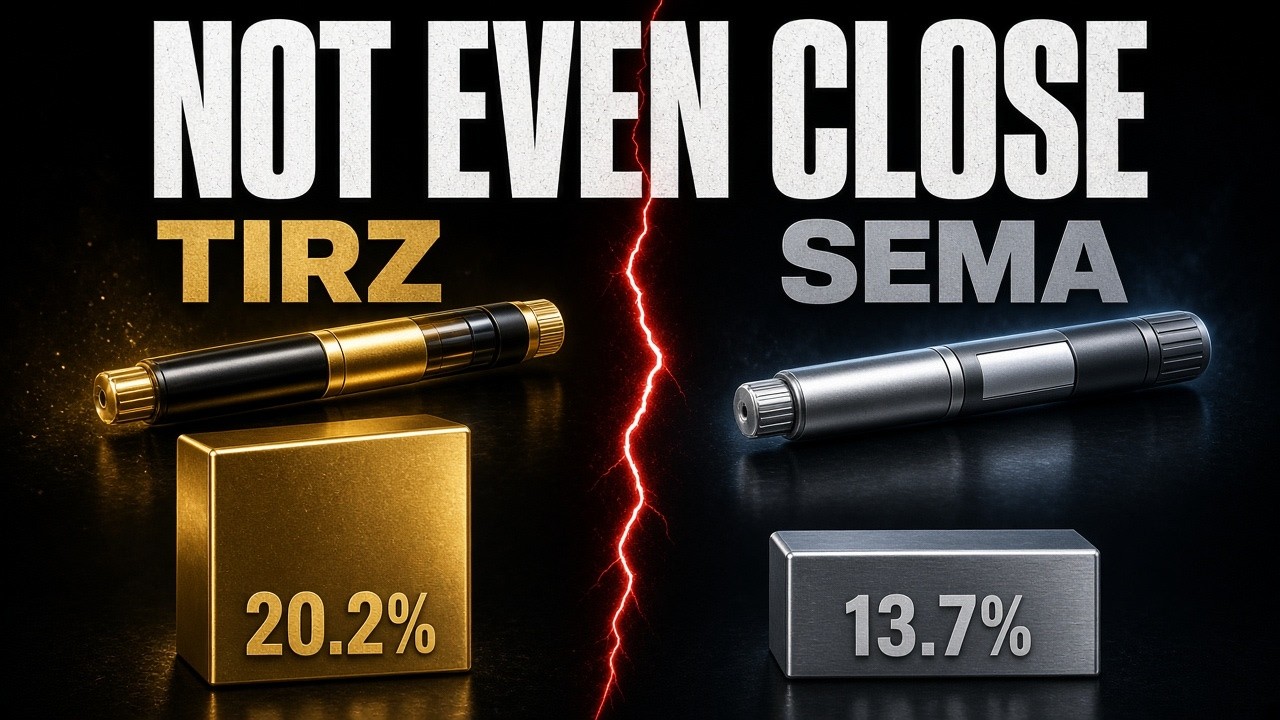
GLP-1 Data, Explained
Tirzepatide, semaglutide, retatrutide — what the trials actually showed, in plain English, no hype.
Open playlist
Peptides Explained
What peptides are, how the common ones differ, and the vocabulary that makes labels stop looking like code.
Open playlistThe only formula
Two numbers off your vial — total mg and how much water you added — and every dose question answers itself. This is math only; what dose anyone takes is a clinician conversation.
Worked example from a real comment thread: an 82.33 mg vial in 3 mL is 27.44 mg/mL — so 10 units is 2.74 mg, not the 2.67 mg the 80 mg label would suggest. Actual fill weight beats label weight, every time.
Peptide Math Cheat Sheet — free
The table behind the videos. Concentration is always mg ÷ mL; a dose is concentration × (units ÷ 100).
| Vial | Water | Strength | Dose at | ||
|---|---|---|---|---|---|
| 10 units | 20 units | 50 units | |||
| 5 mg | 1 mL | 5.00 mg/mL | 0.50 mg | 1.00 mg | 2.50 mg |
| 5 mg | 2 mL | 2.50 mg/mL | 0.25 mg | 0.50 mg | 1.25 mg |
| 10 mg | 1 mL | 10.00 mg/mL | 1.00 mg | 2.00 mg | 5.00 mg |
| 10 mg | 2 mL | 5.00 mg/mL | 0.50 mg | 1.00 mg | 2.50 mg |
| 10 mg | 3 mL | 3.33 mg/mL | 0.33 mg | 0.67 mg | 1.67 mg |
| 80 mg blend | 3 mL | 26.67 mg/mL | 2.67 mg | 5.33 mg | 13.33 mg |
The email list: the Cheat Sheet download is free, no email required. A proper email list (new-video notes + updated tables) launches with the Beginner Pack — subscribe on YouTube so you hear about it first.
The Reconstitution Kit
Everything around the vial — nothing in it is a peptide, and none of it comes from a peptide vendor. This is the checklist from the videos, in one place.
The diluent. Sealed, in date, from a mainstream lab-supply or pharmacy retailer.
The 100-unit scale every video here uses. 10 units = 0.1 mL, always.
Vial top and skin, every time. Cheap, and the step people skip.
Needles never go in household trash. One container lasts months.
Keeps reconstituted vials upright, labeled, and away from the fridge door's temperature swings.
Peptide, mg, mL added, and the date you mixed it — written on the vial the day you mix it.
Date, units, site. Memory is the worst tracking system there is.
Sourcing note: buy supplies from mainstream retailers (Amazon, pharmacy and lab-supply stores) — never a peptide vendor's supplies page. Syringe rules vary by state; check yours. When shopping links are added here, they'll be marked as affiliate links with the disclosure up top — that's the deal, permanently.
The Beginner Peptide Pack
The $9.99 digital download: the tools from this page, finished and formatted — plus the reference pages the videos keep promising.
· leaves about 6.50 mg in this vial after this pin
One payment, yours forever, works offline. Built for the person holding their first vial and a phone full of questions.
- Injection & Dose Tracker — log every pin: date, peptide, units, the mg the math says, site, and notes. Vial-remaining counter included (live below).
- Peptide Math Cheat Sheet, formatted — the full table, printable, fridge-ready.
- Reconstitution, step by step — water down the side of the vial, never blasted onto the powder; the five mistakes video, written out.
- COA checklist — what a real third-party test shows, how to match it to your batch, and the red flags.
- Storage & troubleshooting — fridge rules, and bubbles vs. cloudiness: how to tell foam from a vial you shouldn't use.
Just the tool? Get the Tracker only — $5.99
The tracker below is live now so you can see exactly what you're getting before you spend anything.
Injection & Dose Tracker
The Pack's centerpiece, live on this page. Enter your vial once, log each pin in units — the mg is calculated for you, and what's left in the vial counts down.
Your log
Your pins will appear here, newest first.
Helpful information
The answers that live in the comment threads, written down where they can't get buried.
Units are not milligrams
A unit is a volume mark on a U-100 syringe: 100 units = 1 mL, so 10 units is always 0.1 mL. How many milligrams are in those units depends entirely on your concentration. Twenty units from a 10 mg vial is 2 mg if you added 1 mL of water, 1 mg at 2 mL, and 0.67 mg at 3 mL. Same draw, three different doses — that's why "how many units?" is the wrong first question.
Bubbles vs. cloudiness — is my vial wasted?
Run the settle test. Bubbles from shaking or drawing too fast are cosmetic: let the vial sit undisturbed 10–15 minutes and they rise and clear. Judge the cloudiness after it settles — if it clears with the bubbles, it was foam. If it's still cloudy after settling, or you can see particles floating in it, don't use it and check with the vendor or a pharmacist. When it appeared matters too: cloudy in the first hour is usually foam; cloudy showing up days later points at storage or how the water went in.
How to read a COA (certificate of analysis)
Look for: a third-party lab (not the vendor's own letterhead), a batch or lot number that matches your vial, the actual measured fill weight (that's where a number like 82.33 mg comes from — use it instead of the label's 80), a purity percentage, and a test date. No batch match or no third-party lab means the sheet is decoration, not verification.
Storage basics
Unmixed (lyophilized) vials: cool, dark, and dry; freezer for long-term per most vendor guidance. Reconstituted vials: refrigerated, upright, labeled with peptide, mg, mL, and mix date — and kept out of the fridge door, where temperatures swing every time it opens. When in doubt about a specific product, the vendor or a pharmacist outranks any video, including this channel's.
What this channel doesn't do
No dose recommendations, no "start here and work up," no medical advice, and no peptide vendor or affiliate links — ever. The math, the handling, and the trial data are the whole job. What dose anyone takes is a clinician conversation.